
 Streamline
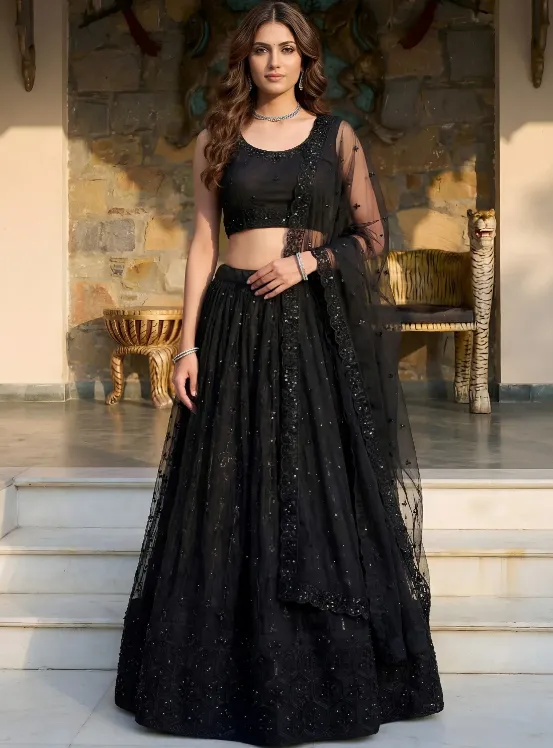
In the photograph taken by the ballroom doors, you can see every flower on the skirt. In the picture from the dinner table, all that shows is a little sparkle at the shoulder. That difference is worth thinking about when choosing a black lehenga for an evening reception. If the work you love sits below the knee, a seated portrait will miss it. If it’s the sweep of a dark skirt you love, a lighter background can do it justice without a single extra sequin.
Start With the Family Photographs
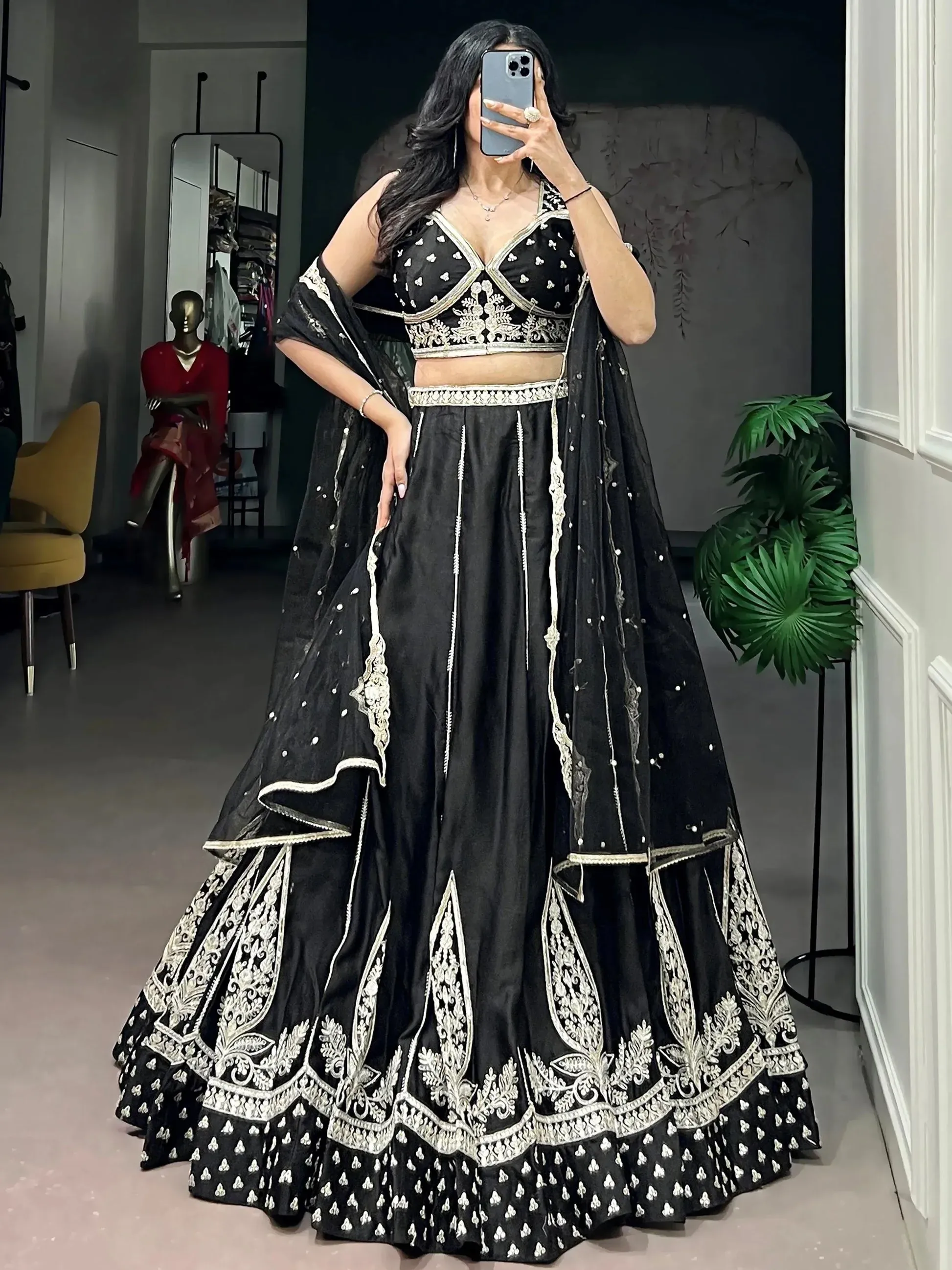
Think about the last family wedding you attended. Chances are someone took a picture of three cousins squeezed onto a sofa, another on the stairs, and a dozen from across the dinner table. Those frames show different parts of an outfit. For an evening with speeches and a seated meal, a blouse with embroidery near the neckline gives those closer pictures some detail. For a garden reception where people tend to stand and mingle, a generous skirt border has more chances to be seen.
View the Whole Skirt First
A close-up can make a tiny motif look like the main feature of a skirt. On a phone, shrink the full-length product photograph until the figure is about as tall as your thumb. See which details you can still pick out. A black organza design with a floral print, zari and sequin embroidery offers a good example. The flowers give the eye a pattern to follow across the skirt, while the metallic stitching adds finer detail that becomes visible as you get closer.
See Sequins When They Move
An occasional glint can be lovely, especially during a first turn on the dance floor. Each sequin catches light at a particular angle, so a still picture can miss the shimmer you saw in person. A short video of that particular garment moving gives you another way to judge it. Pay attention to the spaces between the bright spots. Some people love an almost uninterrupted black skirt with a little light at the hem. Others want the movement to show across every panel.
Give Black Layers Some Definition
A lehenga choli in black colour can have plenty of definition even with very few sequins. One jacquard skirt carries floral zari embroidery, paired with an organza dupatta edged in lace on all four sides. For a portrait, bring one edge of that dupatta across the waist and leave part of the skirt exposed. The lace draws a line between the two black layers. For a quieter finish, take the same edge over one shoulder and allow the skirt pattern to show in full.
Try the Outfit by Lamplight
Give the outfit an evening fitting once it arrives. Daylight by a bedroom window is useful for checking colour, but the lamp beside the sofa may come closer to the light at dinner. Ask someone to take a few ordinary phone pictures while you stand, sit and turn. Keep the first set as it comes out of the camera. Brightening every shadow can make embroidery look clearer on your screen than it will in pictures shared by friends the next morning.
-
Take one full-length photo from across the room.
-
Sit down for a waist-up portrait.
-
Record a slow turn under the lamp.
-
Compare the dupatta folded and open.
-
Check the skirt against a dark background.
Find Your Light at Dinner
At the venue, look for a spot where the light falls across the front of your outfit. A warm wall lamp slightly to one side can pick out raised floral stitching, while a bright window directly behind you can leave the whole skirt in shadow. The background matters too. Against a cream wall, even a plain dark sleeve has a clear outline. There’s no need to move the whole group. Turning slightly or stepping away from a dark curtain can be enough.
Conclusion
Choose the detail you would be sorry to lose in the pictures. It might be a spray of flowers at the waist, the narrow embroidered edge of a dupatta or the way a skirt fans out on the dance floor. Tell the friend who usually takes your photographs about that one thing before dinner starts. A request as simple as “get the border while I turn” gives them something to look for, and leaves you free to enjoy the rest of the evening.
